
Subscribe to continue reading
Subscribe to get access to the rest of this post and other subscriber-only content.

Subscribe to get access to the rest of this post and other subscriber-only content.
One of the unexpected benefits of fasting is not just physical discipline, but spiritual clarity.
Fasting sharpens your awareness. It reveals what normally goes unnoticed. Distractions become louder before they fall away, and emotions rise to the surface so they can be examined instead of ignored. In that way, fasting is not only about what you deny your body, but what you confront within your spirit.
One of the quiet struggles of this fast has not been hunger. It has been restraint. Not restraint from food, but restraint from explaining myself, defending myself, and shrinking just enough so someone else can feel more secure.
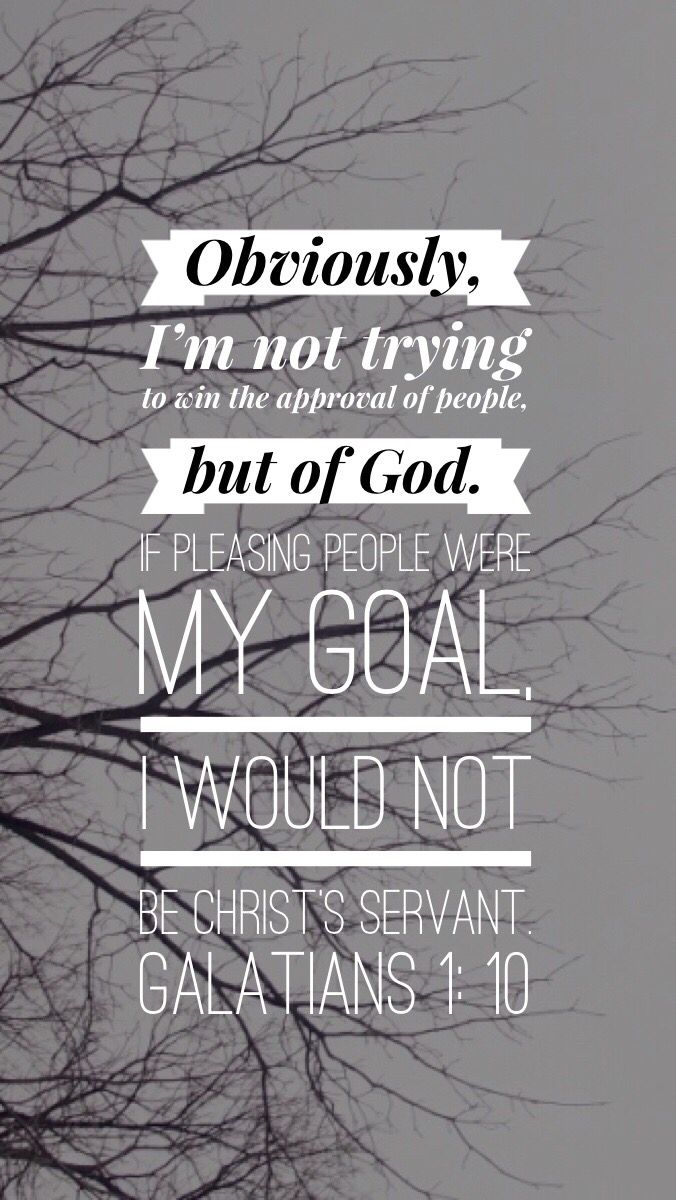
Fasting has a way of exposing how often we feel compelled to justify who we are, what we know, and why we move the way we do. It reveals how easily the need for approval can slip into places where confidence once lived. And it shows us just how much energy can be spent trying to be understood by people who are not actually seeking understanding.
If you have lived long enough, you learn that there will always be people who see you and people who search you. Some meet you with grace. Others arrive already looking for fault. No matter how carefully you speak, how thoughtfully you move, or how much good you bring, they will find something to question.
That realization can be unsettling, especially in a season of consecration and prayer.
The Apostle Paul asked a question that is rarely quoted, but deeply revealing:
“Am I now trying to win the approval of human beings, or of God?” (Galatians 1:10).
That question lands differently during a fast.
Because fasting strips away the illusion that every opinion deserves equal weight. It reminds you that obedience to God will not always be comfortable to people, and clarity of purpose can sometimes make others uneasy. Not every reaction requires a response. Not every criticism requires correction.
Scripture also tells us, “A person’s wisdom yields patience; it is to one’s glory to overlook an offense” (Proverbs 19:11).
Overlooking is not weakness. It is discernment.
There will always be a thorn. Someone who presses, provokes, critiques, or unsettles you. The mistake is not their presence. The mistake is allowing them to redirect your focus, dilute your confidence, or pull you into defending what God has already affirmed.
Fasting teaches restraint.
Restraint in speech.
Restraint in reaction.
Restraint in the need to be validated.
It teaches you how to stop chasing clarity with people who benefit from misunderstanding you. It reminds you not to make yourself smaller just so someone else can feel bigger. And it strengthens your resolve to keep walking in purpose without dragging every critic along with you.
You already know who you are. You already know what you have been called to do.
You already know the fruit of your labor.
So do not chase people who are committed to misunderstanding you. Do not shrink to make someone else comfortable. And do not abandon your assignment just because someone else is uncomfortable with your obedience.
Brush it off. Keep walking. Let God deal with what you cannot fix.
Christmas has always been one of my favorite times of the year. There is something unmistakably special about this season. People seem lighter, more joyful, and more willing to extend kindness, even while navigating the stress of decorating, shopping, traveling, and trying to make the holiday feel meaningful and memorable. There is a shared warmth in the air, a collective pause from routine, and a desire to connect. I genuinely love that.
Yet as much as I love Christmas, I love Christ even more.

This season continually reminds me of the importance of keeping my focus centered on Him and on His will for my life. When I lose that focus, even with good intentions, I can slowly drift into subtle forms of bondage. Overextending myself. Saying yes too quickly. Trying to meet expectations that were never assigned by God. Measuring success by activity instead of alignment.
True freedom comes through contentment.
Contentment releases us from the pressure to perform, to impress, or to be seen by others. It frees us from the exhausting cycle of doing more simply to please people, many of whom may never fully understand or even notice the sacrifice being made. When our motivation shifts from obedience to approval, the joy of giving quietly turns into obligation, and obligation eventually leads to weariness.
Scripture reminds us of this truth with clarity and gentleness: “Godliness with contentment is great gain” (1 Timothy 6:6, NIV).
Christmas is not meant to be a season of depletion. It is meant to be a season of remembrance. Christ came to bring freedom, not burden. Peace, not pressure. Rest, not relentless striving.
There is nothing wrong with caring deeply for others or giving generously. In fact, those acts reflect the heart of Christ. But there is wisdom in knowing when to stop, when to rest, and when to say no. Boundaries are not unloving. They are often the very thing that preserves joy and sustains faith.
Sometimes the most faithful act we can offer during this season is restraint. Choosing simplicity. Choosing presence over perfection. Choosing obedience to God’s leading instead of responding to every external expectation.
This Christmas, my prayer is to remain anchored in contentment. To give freely without overextending. To serve joyfully without seeking validation. To celebrate deeply while remaining grounded in the truth that Christ alone is the reason for this season and the source of true freedom.
May we all find the courage to slow down, the wisdom to honor our limits, and the peace that comes from living unbound and centered on Him.
Blessings…
I have been reading through the Book of Genesis, and lately my mind has been locked onto the twelve tribes. I memorized the names of the tribes when I was young, but recently something stirred in me. In my sleep, I could hear myself recalling the names of each tribe and tying them back to Leah and her maid, and to Rachel and hers. I intuitively knew that Rachel had only two sons, but something didn’t make sense to me: neither Joseph nor Benjamin produced the priestly line (the Levites) or the messianic line. Surely the priests or the Messiah would come through Rachel; right?

That question bothered me enough that I had to get up, open my Bible, and study it again.
As I read the scriptures, my heart kept returning to Leah and Rachel, and the more I delved into their stories, the more God began revealing something to me that I want to share with you.
Scripture tells us of Leah, a woman who lived in the shadow of her sister. She not only felt invisible; she felt unloved. Her husband Jacob adored Rachel. The world applauded Rachel. But heaven saw Leah.
“When the Lord saw that Leah was unloved, He opened her womb.” (Genesis 29:31)
When others turned away, God fixed His gaze upon her. When she felt unwanted, He gave her purpose. And through her lineage, the one no one celebrated, came the priestly line, the royal line, and ultimately the Redeemer Himself: Jesus Christ.
That is the miracle of being seen by God. He takes what others dismiss and calls it divine.
He turns quiet tears into generational blessing.
Life has a way of making even the strongest hearts feel invisible. We work hard, love deeply, and give faithfully , yet still find ourselves overlooked by those who seem to notice everyone else. But hear me clearly: God never overlooks you.
Maybe you’ve been faithfully sowing seeds of kindness at work.
Maybe you’ve been showing up for your family, supporting loved ones, or serving behind the scenes; and no one seems to notice.
Maybe you feel like your prayers have echoed unanswered for too long.
But God sees every unseen effort. “You have kept count of my tossings; put my tears in Your bottle. Are they not in Your book?” (Psalm 56:8). When you feel overlooked, remember this: you do not have to be someone’s first choice to be God’s perfect choice. His favor is not determined by human validation. The same God who saw Leah sees you, right there in the middle of your frustration, your faithfulness, and your fatigue. He is still writing your story, and He never misplaces a page.
So lift your head today. Walk with quiet confidence, knowing that being unseen by others has never meant being forgotten by God. You are seen. You are chosen. You are deeply loved.
The world may not know your name; but Heaven does.

I have spent most of my life chasing goals, setting them, striving for them, and doing everything in my power to achieve them. Ambition has always lived in me. It pushed me to work harder, dream bigger, and keep moving even when the road was long and steep. And by God’s grace, much of what I pursued, I achieved. But the older I get, the more I realize that ambition alone is not enough.
There is a difference between striving and surrendering, between self-direction and divine alignment. Jeremiah 10:23 says, “Lord, I know that people’s lives are not their own; it is not for them to direct their steps.” That scripture humbles me every time I read it because it reminds me that even with all my effort, intelligence, and determination, I am not truly in control. God is. And thank goodness for that.
When I look back on my journey, I see moments of victory that were clearly guided by His hand, opportunities that opened in ways I could have never orchestrated myself. But I also see the other moments, the ones that did not go according to plan, the disappointments that left me questioning my worth, the failures that bruised my ego, and the betrayals that broke my heart. I have experienced embarrassment, setbacks, and seasons that felt like detours from the life I was trying to build. With hindsight, I now know those detours were often redirections, God gently steering me back onto the path He had designed all along.

It is human nature to want to control outcomes. We make plans, set timelines, and map out where we think we should be. But if we are not careful, our ambition can become louder than God’s voice. And when that happens, we risk chasing success without substance, accomplishments that look good on paper but leave our spirits empty. True success is not measured by titles, wealth, or recognition. It is measured by obedience to God’s will and alignment with His purpose.
Over time, I have learned that disappointments do not define us. A failed plan does not mean a failed life. What matters most is how we respond, whether we allow defeat to stop us or propel us forward with greater wisdom. Some of the most transformative seasons of my life did not come from my victories but from my valleys. They taught me perseverance. They taught me humility. And most importantly, they taught me dependence, the kind that forces you to lift your eyes from your plan and fix them back on God’s.
Surrender does not mean we stop dreaming or working hard. It means we hold our plans loosely and trust God’s hands to shape them. It means acknowledging when we have tried to do things in our own strength and having the humility to say, “Father, forgive me. I need Your wisdom here.” It also means remembering to give Him glory in our successes, not just crying out when we fall, but praising Him when we rise.
The truth is, even when we are succeeding, we must be careful not to let pride replace gratitude. Ambition without humility can lead us away from God rather than closer to Him. So even when things are going well, maybe especially then, we need to pause, reflect, and acknowledge that “Every good and perfect gift comes from above” (James 1:17).
Now, as I look back over my life, I feel nothing but gratitude. I have lived a life that has been full, full of joy and pain, success and struggle, leaps forward and unexpected detours. If my story ended today, I would still say I have lived a good life. Not because I achieved everything I set out to do, but because God walked with me through it all, shaping me, stretching me, and realigning my ambition with His greater purpose.
So if you find yourself striving, pushing, and planning your way forward, take a breath and remember that you were never meant to direct your steps alone. Ambition may get you moving, but alignment will get you there. Let God lead. Surrender your plans. Trust His timing. And know that no failure, no disappointment, and no detour can derail the destiny He has written for you.
Recently, my church has been on a series titled “Once Upon a Time.” We’ve been studying the parable of the shrewd servant in Luke 16. I won’t go into all the details of what we’ve covered, but it has made me think deeply about what God’s Word says about stewardship.

So often we connect stewardship only with money, but Scripture paints a much bigger picture. Stewardship is about how we handle everything God has placed in our care; our time, our talents, our resources, and even our relationships.
Peter wrote these words: “Each of you should use whatever gift you have received to serve others, as faithful stewards of God’s grace in its various forms” (1 Peter 4:10). That tells me that what I’ve been given, and what you’ve been given, was never meant to stop with us. It was meant to flow through us, to serve others and reflect God’s grace. One comment my pastor made really stayed with me: “I am not a CEO, I am a shepherd.” That’s the heart of stewardship; seeing ourselves as caretakers, not owners.
Jesus also reminded us of this responsibility in Luke 12:48: “From everyone who has been given much, much will be demanded.” It’s not a warning to frighten us, but an invitation to take seriously the opportunities God has placed in our hands. Whether we’ve been given little or much, God calls us to be faithful managers of it.

For many of us, stewardship shows up most clearly in how we handle our finances. It’s easy to feel pressure to keep up appearances, and before we know it, we can find ourselves in debt. If you’re carrying that burden, I want to encourage you: don’t try to fix it overnight. It wasn’t created overnight, and it won’t be solved that quickly either. Getting out of debt takes discipline and a steady heart. And it takes the guidance of the Holy Spirit, who gives us strength to stay the course when it feels hard.
Stewardship isn’t just about money, but how we manage our finances often shows the posture of our hearts. When we live within our means, when we give generously, and when we manage resources wisely, we show God that we trust Him to provide.
At the end of the day, stewardship is not just an action. And when we approach life this way, we discover that nothing entrusted to us is too small for God to use in extraordinary ways.
The steadfast love of the Lord never ceases; His mercies never come to an end; they are new every morning; great is Your faithfulness.” ~Lamentations 3:22–23
Life has a way of pulling us into seasons of despair, moments when we feel weary, misunderstood, or overwhelmed. In those moments, it can be easy to forget that God’s faithfulness has never wavered. He remains constant, even when everything else feels uncertain.
God’s love for us is not conditional on how well we perform, how perfectly we respond, or even how faithfully we love Him in return. His love is steadfast. It meets us when we feel unworthy, when we don’t act “lovely,” and when our own patience or grace falls short.
How comforting it is to know that His love is not dependent on us but flows freely from His very nature. As the Psalmist declares, “The Lord is gracious and compassionate, slow to anger and rich in love” (Psalm 145:8).
And what about forgiveness? Often, forgiveness is something we find difficult to extend to others; or even to ourselves. Yet God forgives fully and completely. “If we confess our sins, He is faithful and just to forgive us our sins and to cleanse us from all unrighteousness” (1 John 1:9). His forgiveness restores, redeems, and renews.
So when despair sets in, when love feels hard to give, or when forgiveness feels out of reach, we can rest in this truth: God does not treat us as our failures deserve. Instead, He loves us unconditionally, forgives us completely, and remains faithful even when we falter.
This is why we can say with confidence: despair may visit, but it will never have the last word. God’s faithfulness always does.
Closing Thought:
If you find yourself in despair today, remember this: you are loved with an everlasting love, forgiven with complete grace, and held by a God whose faithfulness never fails.
In moments of profound grief and reflection, I find myself leaning into the unwavering faithfulness of God. Life’s seasons often challenge us, stretching us in ways we could not anticipate—times of refining, recalibration, and silent reliance on His grace. Recently, I have walked through such a season. Some days have been marked by uncertainty, where clarity was elusive, and burdens felt especially heavy. Yet, amidst the unknown, God’s presence has remained steadfast and certain.
Time and again, I have witnessed His hand at work in circumstances beyond my control and in places I could not reach. As scripture reminds us, “The Lord will fight for you; you need only to be still” (Exodus 14:14). Even when I felt unseen, unheard, or uncertain, He has stood in the gap, offering His grace, protection, and peace. His love is unwavering.

At the same time, I have been strengthened and renewed through the blessings present in my personal life—celebrating meaningful milestones with family, exploring new places that awaken a sense of wonder, and being surrounded by faithful friends whose prayers and presence carry me through difficult times. These moments serve as sacred reminders that God’s goodness often sustains us in the midst of life’s trials.
I have come to understand that God’s benevolence is not dictated by circumstances. Psalm 34:19 declares, “Many are the afflictions of the righteous, but the Lord delivers him out of them all.” When the path is steep, He provides the strength we need to continue climbing.
And while challenges certainly arise, I stand firm on His promise in Isaiah 54:17: “No weapon formed against you shall prosper.” This does not mean life is without battles, but it reinforces that we serve a God who equips us to overcome them.
I ask myself—and invite you—to consider: what season are you facing right now? Are there moments in your life where you need to be reminded that God’s presence remains active, His protection unceasing, and His work behind the scenes ongoing? Perhaps now is a moment to pause and offer gratitude—not solely for victories, but also for the lessons learned within the valleys.
Be encouraged by the everlasting truth in Lamentations 3:22–23: “The steadfast love of the Lord never ceases; His mercies never come to an end; they are new every morning; great is Your faithfulness.” Cling to this truth, for God’s faithfulness endures, here and now, even in our most vulnerable moments.
May we all find comfort and strength in His unchanging love and unwavering grace
One of the blessings—and sometimes the challenges—of life is that if we live long enough, we’re bound to encounter offenses. Someone might say something untrue, or say something true that we simply don’t like or that rubs us the wrong way. It could be a careless word from someone or a dismissive attitude that sets us off. And when we feel misunderstood or treated insensitively, our reactions can become overwhelming.
Honestly, I believe that being offended itself isn’t the biggest problem. The real challenge is when we hold onto those offenses, refusing to let them go. That’s when we hurt ourselves the most. As believers, we have a divine guide for every area of our lives—including how we handle offenses.
Ephesians 4:31-32 (NIV) gives us clear instruction:
“Get rid of all bitterness, rage and anger, brawling and slander, along with every form of malice. Be kind and compassionate to one another, forgiving each other, just as in Christ God forgave you.”
Recently, I observed a situation that had been developing over time. An individual received feedback from colleagues regarding their communication style. The feedback highlighted concerns about tone and approach, including comments related to interactions with others.
This is not the first time I have discussed responses and attitudes with this individual. Previously, it was noted that responses to feedback could sometimes be defensive or withdrawn. The individual often maintains their own perspective, which can impact team dynamics.
In response to recent feedback, the individual chose to share their perspective openly. Their intentions appeared to be genuine, and they expressed a willingness to clarify their position. This situation underscores the importance of how perceptions and responses can influence working relationships and the overall team environment.
As believers, we are called to humility and self-examination. Whether we are right or wrong, we should be mindful of how our words and actions impact others. When someone points out an offense, let’s remember Ephesians 4:31-32—get rid of bitterness, rage, anger, slander, and malice. Instead, be kind, compassionate, and forgiving—just as Christ forgave us.
If we truly value unity and collaboration, our behaviors must reflect our words. Let’s choose humility, address offenses quickly, and demonstrate Christ’s love through our responses. When we do, we foster environments of healing, growth, and trust—becoming true reflections of His grace.
Life is not always easy. In fact, it rarely is. It’s a beautiful, complicated tapestry woven with threads of joy and pain, celebration and sorrow, triumph and setback. And yet, as I sit with all of it-the good and the hard-I’m reminded of a word that often gets overlooked: Long-suffering.

The Bible speaks of long-suffering not as weakness, but as strength. In Galatians 5:22, it is listed among the Fruits of the Spirit: “But the fruit of the Spirit is love, joy, peace, long-suffering, gentleness, goodness, faith…” (KJV). Other translations use patience, but I’ve come to love the word long-suffering-because it tells the truth. It acknowledges that sometimes we suffer, and sometimes we suffer long. But through the Spirit, we do so with grace.
I recently heard someone say, “If you truly appreciate life, you have to appreciate all of it.” That means not just the mountaintop moments, but also the valleys-the disappointments, the losses, the betrayals. And when I look back, I see it clearly: I’ve been so deeply blessed. I’ve lived a life that far exceeded anything I dreamed of as a child. But that same life has brought me sickness, death, heartbreak, and setbacks I never saw coming. Still, I wouldn’t trade it.
Long-suffering has taught me how to be still when everything inside me wants to fight or flee. It’s taught me how to love people who are hard to love, and how to trust God when I don’t understand His ways. It’s stretched my faith, deepened my compassion, and reminded me that even in the pain, God is present.
Romans 5:3-4 says it best: “We glory in tribulations also: knowing that tribulation worketh patience; and patience, experience; and experience, hope.” Long-suffering doesn’t just help us survive-it makes room for hope to take root.
So if you’re in a hard season right now, take heart. The suffering isn’t the whole story. It’s a chapter-yes, even a long one-but not the end. And through it all, you are being shaped, strengthened, and prepared for even greater joy.
That is the gift of long-suffering.
 Dr. LaSharnda Beckwith